
To me, drinking matcha lattes used to be, quite frankly, what I commonly like to refer to as “rich people shit”. Reserved for wealthy middle-aged women either on their way to or from Pilates (queue Shirin David’s “Bauch, Beine Po” song). And if I’m being completely honest, I’ve always had a bit of a personal vendetta against Pilates. In my mind, it is the biggest scam of our time: a skinny female instructor, who doesn’t eat, runs half-marathons for fun, and does three other forms of punishing exercise, charging a small fortune to con a group of not-so-skinny women into believing that this is the magic solution. But I stray from the matter at hand.
So yes, that was my starting point with matcha. I used to think I had it all figured out.
You know the version: minimalist, stone slabbed cafes kept in various shades of beige and €7-10 lattes that make you feel like you’ve made a responsible life choice. It’s wellness, but performative. And overpriced.
And then, today happened.
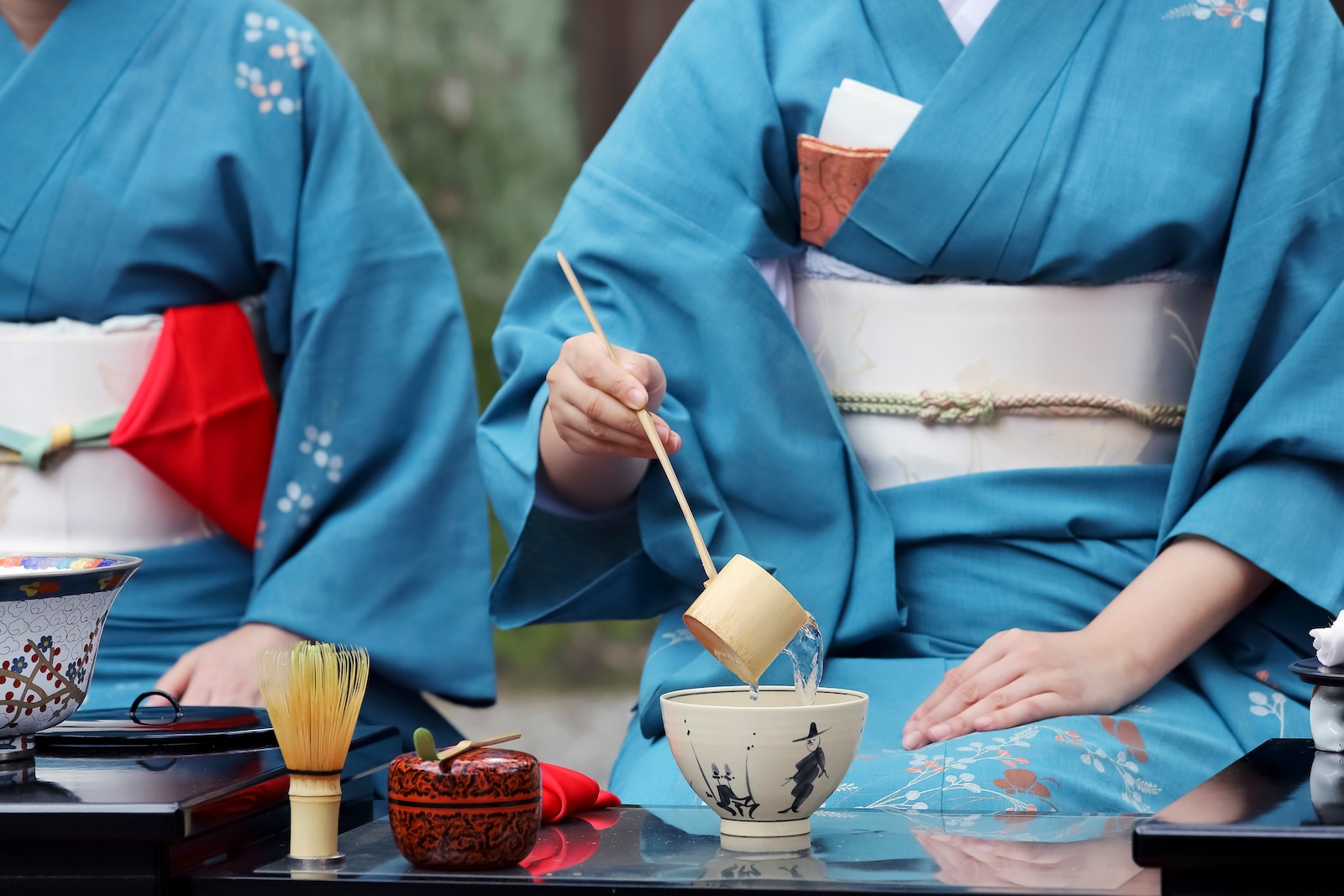
Image below: ©Shutterstock
This morning, I was invited by Paper & Tea (a Berlin-founded tea company known for its design-driven approach to tea culture, its beautifully curated physical stores, and its extensive online shop) to experience an authentic Japanese tea ceremony. Their Vienna store, tucked elegantly into Walfischgasse 1, right opposite the Vienna State Opera, feels less like a shop and more like a minimalist sanctuary for people who alphabetize their teas (aspirational).
I arrived thinking I would “taste some tea.” I was not expecting a lesson in cultural tradition.
Instead, I entered a world where every movement has meaning and where I quickly realized I was one incorrect napkin fold away from social collapse.
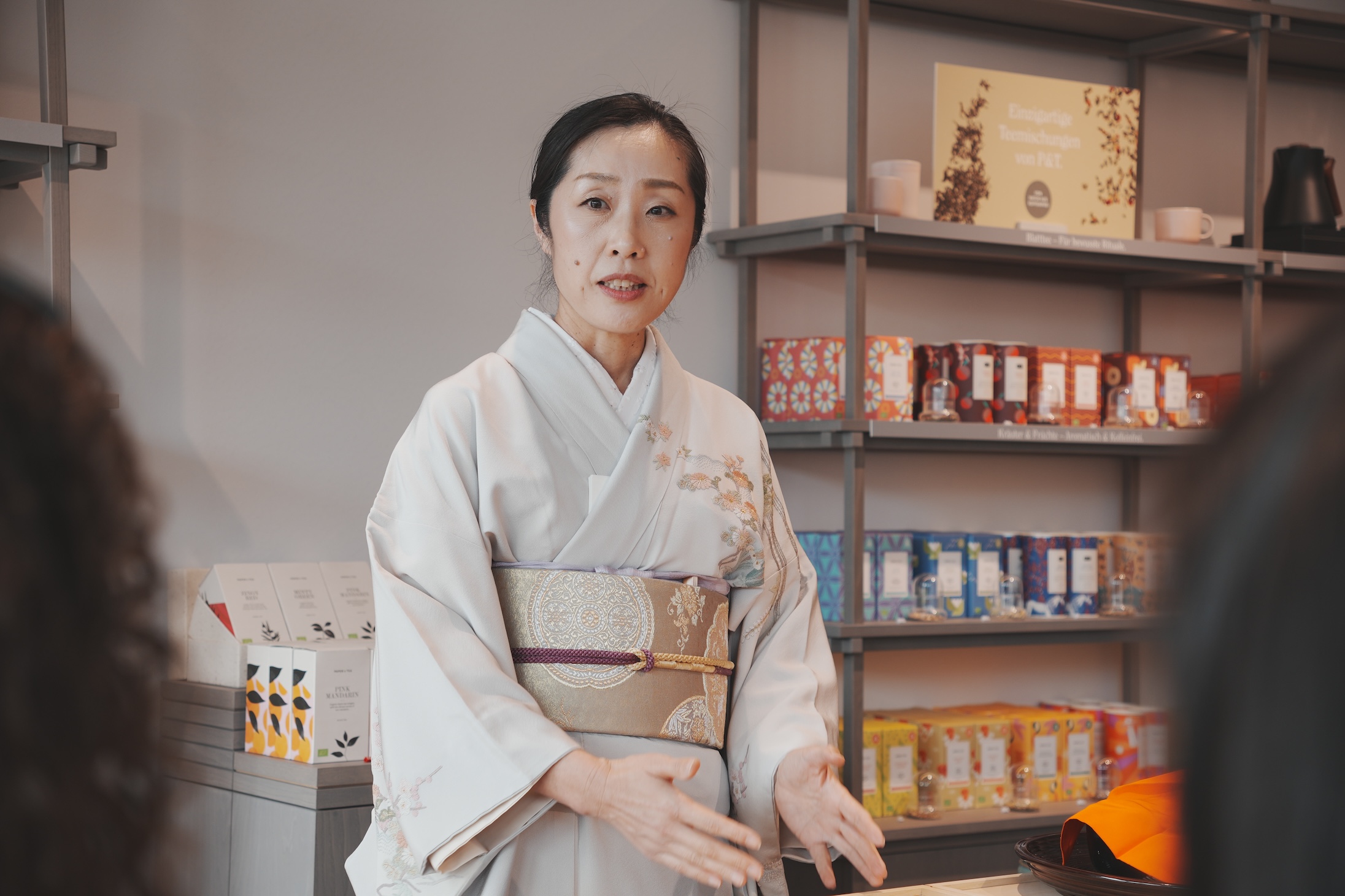
The ceremony was led by Kyoko, whom I had the pleasure of meeting today. She began learning tea ceremony as a child. What makes tea ceremony so compelling, and so often misunderstood abroad, is that it is not simply “making tea beautifully.” In the formal tradition, the host’s movements, utensils, seasonal references, and language are all studied disciplines. Serious practitioners train under a teacher for years, often progressing through licenses and levels of instruction rather than “picking it up” casually. Urasenke, one of the major tea schools, explicitly describes a multi-year path of study, with some milestones taking two to three years and others commonly around seven years or more.
The Japanese tea ceremony is an artform composed of many rules. In formal gatherings, the most senior guest and the last guest are often expected to be knowledgeable, because they carry specific responsibilities. Sources describing guest roles note that the principal guest (shokyaku), seated closest to the host, represents the guests and speaks with the host about the tea, sweets, and utensils, while the last guest (makkyaku or otsume) handles practical courtesies such as returning utensils and supporting the flow of the gathering. None of these exchanges are improvised small talk; they follow taught conventions and differ by school and occasion.
Dress, too, is part of the ceremony’s grammar. Both men and women can absolutely perform tea ceremony, and both do. The host’s clothing is chosen with care and restraint, often in keeping with season, formality, and school custom. Guests are likewise expected to dress conservatively and avoid anything flashy or distracting
Among the most evocative objects in tea practice is the fukusa, the silk cloth used in purifying utensils symbolically. A fukusa is indeed a traditional personal item, and women often use red-orange or vermilion tones while men commonly use purple, though colors can vary by school and context. It may be given by a teacher, but that is not a universal rule. As for washing: tradition strongly discourages washing or wetting the fukusa; instead, it is typically kept dry and cared for gently.
Sweets are served before the tea. In formal tea, confections are not decorative extras but part of the sequence, balancing matcha’s bitterness and preparing the palate. Guests are often given kaishi paper: a kind of personal paper used when receiving sweets and there are taught ways of handling and folding it properly.
Image below: ©P&T / Hok Him Lam.
And then comes the tea and the actual matcha itself.
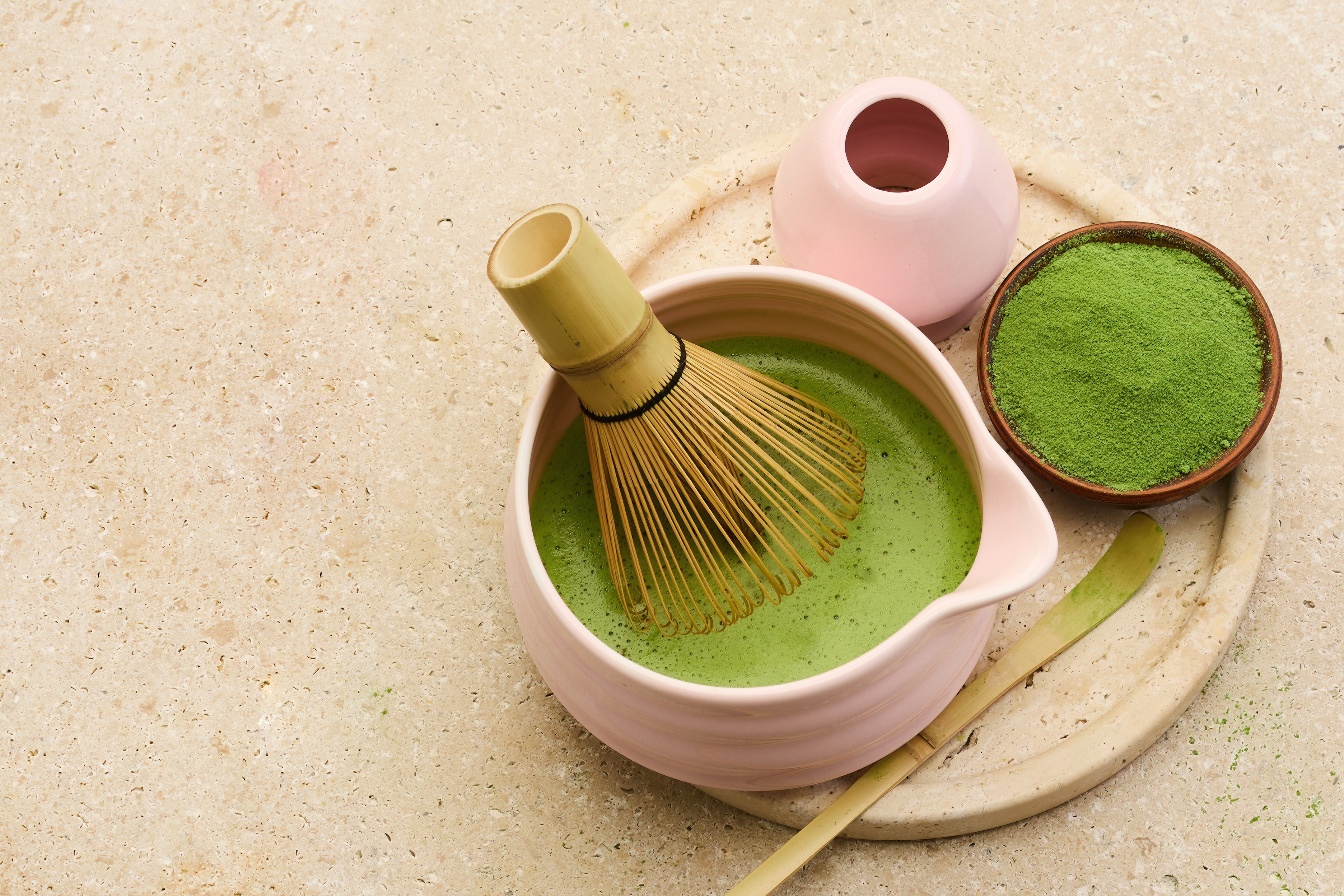
It is worth noting that, unlike coffee, with its sharp jolt and equally abrupt descent, matcha delivers a far more considered form of energy. Its unique pairing of caffeine and L-theanine, an amino acid known to promote calm focus, creates a sense of sustained clarity . Because the finely milled powder contains the entire tea leaf, matcha is also exceptionally rich in antioxidants, particularly EGCG, long associated with cellular health and longevity.
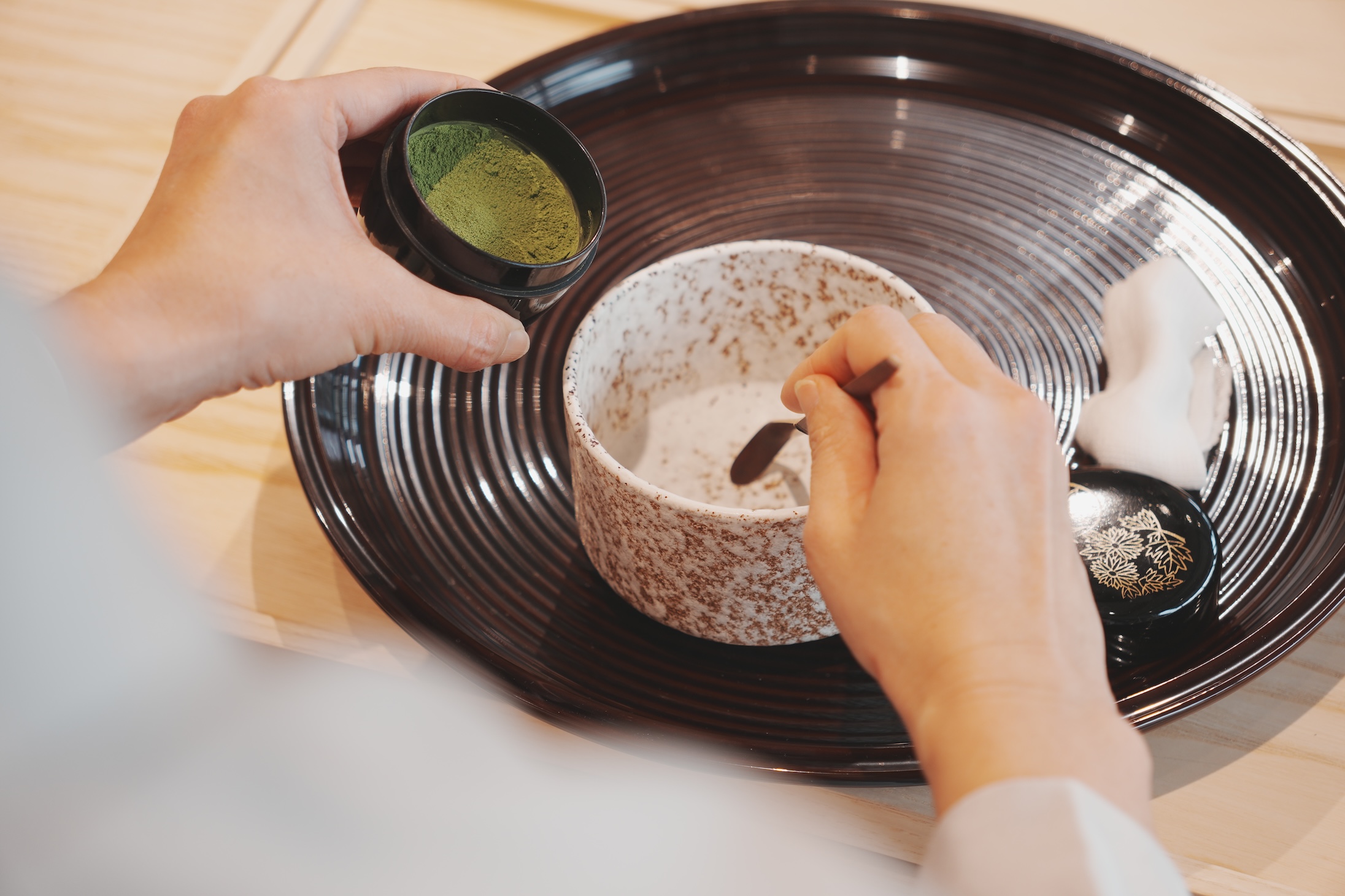
I watched Kyoko prepare matcha in perfect choreography. Every gesture folding, scooping, whisking has been refined over years. The bamboo whisk moves with quiet precision, producing a surface of delicate foam that looks almost too perfect to disturb.
And yet, disturb it you must.
When you receive the bowl, there is a sequence: how to turn it, how to hold it, how to drink. And then, the moment that stayed with me most: the final sip. You are expected, quite deliberately, to slurp it. Loudly. But in this context, the sound is not rude, it is appreciation. It says: this was good.
What struck me most, beyond the precision and beauty, was how different this experience is from the way we consume our beverages today. The global matcha craze, borrows the aesthetics: the whisk, the bowl, the vibrant green. But the ceremony reveals something deeper: a commitment to presence. There is no rushing a tea ceremony. No multitasking. Everything is intentional. Everything is earned.
Image below: ©P&T / Hok Him Lam.
Kyoko also shared something that stayed with me long after the last sip of tea: there are fewer and fewer teachers remaining, and fewer people, especially from younger generations, willing to dedicate the time required to truly learn the tradition. Sitting there, watching something so precise and intentional unfold in front of me, it was difficult not to feel a quiet sadness at the thought that this could one day fade.
And perhaps that is why matcha has become such a symbol of modern luxury. Not because it is rare or expensive, but because it represents something we increasingly lack: time, attention, and the discipline to do something properly.
Also, and this feels important, remember that mental list I keep of “rich people shit to do and buy when I gain truly irresponsible, fuck-off levels of wealth”? Well, I’ve added a new entry. Somewhere between “buy McLarens in every color of the rainbow” and “spend every vacation at Velaa Private Island”, I’ve decided that I might travel to Japan and actually learn the art of the tea ceremony.
Not, of course, for any noble reason.
But so that one day I can perform it, perfectly, meticulously, with years of training behind me, for my idiot, private school friends. Like a geisha (or geiko in Kyoto) performing it as part of her entertainment services. I will be demonstrating the skilled, artistic preparation of matcha.
And honestly, that might be the most luxurious outcome of all.
As I left Paper & Tea, carrying my very own matcha making set inclusive of all the necessary utensils, I found myself rethinking my relationship with matcha. It is, at least now, something I approach with a little more humility.
And occasionally, with a well-timed, deeply respectful slurp.